Bangladesh through a Chinese investor's lens.
A field briefing for capital looking out from China — mapping Bangladesh's politics, demographics, economy, and sector ecosystem against China's own development timeline. The thesis: Bangladesh today rhymes with China somewhere between 1995 and 2008, depending on the metric.
Bangladesh today ≈ China when?孟加拉的今天 = 中国的哪一年?
Headline: Bangladesh in 2026 sits roughly where China did between 1995 and 2008, depending on the metric. Per capita GDP is at the China-2007 line. Median age is at China-1995. Manufacturing depth is at China-mid-1990s. Bureaucratic execution speed is, frankly, slower than China at any of those points — but English skills are better, and the geopolitical posture is opening up.
To me, Dhaka today has that feeling that Beijing had post-WTO, pre-Olympics. Everything is possible. There is demand everywhere. You can walk into any room and make a deal. There's a group of people who are smart and hungry and educated and are going to succeed. It's quite a time to invest in Bangladesh.
A young country, with a 30-year demographic window.人口结构 · 仍处于人口红利窗口期
Bangladesh's median age is 27.6 — almost identical to China's in 1995, and twelve years younger than China's ~40 today. About 2 million workers enter the labor force every year. The dependency ratio is at its most favorable point for the next two decades.
For Chinese investors used to facing a contracting domestic labor force, Bangladesh offers a 20–30 year window of structural labor abundance. The labor cost arbitrage is durable — not a 5-year window like Vietnam.
$2,911 — exactly where China was in 2007.人均GDP · 相当于中国2007年水平
Bangladesh's nominal per capita GDP in 2026 is projected at $2,911, having just overtaken India ($2,812). For context, China crossed that threshold in 2007 — the year before the Beijing Olympics, just ahead of the post-2009 stimulus boom. Bangladesh's runway, if growth re-accelerates, is enormous.
What's behind the number
- Economy size · ~$510B nominal, ~$1.7T PPP — roughly the size of Vietnam.
- Growth has slowed · 3.49% FY24-25, ~3.9% projected FY26, well below the 6–7% norm of the Hasina decade. Banking stress, FX reserves drain, post-uprising disruption.
- BNP target: $1 trillion GDP by 2034 — i.e., roughly doubling in 8 years. Implies sustained 9% growth. Aggressive, contested by economists, but signals direction.
- Inflation · ~8.7% · stubborn, eroding real wages.
- FX reserves stabilizing in early 2026 after a difficult 2024–25 stretch.
40% urban — China's 2003 inflection.城市化 · 类似中国2003年节点
Bangladesh is ~40% urbanized. China crossed 40% in 2003 and proceeded to add ~25 percentage points of urbanization over the next two decades — fueling housing, infrastructure, durables, and service consumption at industrial scale. Bangladesh has the same migration wave still coming.
The honest read: weaker than China at every comparable stage — but English is the ace.教育与人力 · 整体落后中国当年,但英语是亮点
Tertiary enrollment is around China-2008 levels. Quality of top universities is roughly China-2000 levels. Quality of mid-tier universities is meaningfully behind. The compensating advantage: English proficiency is materially higher than China's at any comparable development stage, which unlocks services and BPO export models that China never fully captured.
Universities to know
- BUET — Bangladesh University of Engineering & Technology. The "Tsinghua of Bangladesh." Engineering, software, infrastructure talent. Where Chinese investors should source senior technical hires.
- University of Dhaka. Oldest, most politically active. Strong in economics, policy, social science.
- North South University, BRAC University, IUB. Top private universities. Business, computer science, English-medium instruction.
- 28 Bangladeshi universities appeared in Times Higher Education Asia Rankings 2026. None in QS World top 400 in 2024.
University administration is politicized — appointments by loyalty, student politics disrupting semesters, curricula slow to integrate AI/cloud/coding skills. Chinese firms hiring at scale should expect to train fresh graduates from scratch, similar to China-2005 hiring practice.
1 million freelancers — a global services hub, not a product hub.科技人力 · 全球第二大自由职业者群体
Bangladesh is the #2 global freelancer market by volume (after India), with over 650,000 active and ~1 million informally connected freelancers. The ICT sector is ~$9.4B and growing 6%+ annually. But the model is closer to India-style services than China-style product. There is no Bangladeshi Tencent, Alibaba, or BYD analog.
Numbers worth remembering
- 4,500+ registered software/IT companies · 400,000+ employed professionals.
- ~1M freelancers earning ~$500–$700/month — 5x the entry-level corporate salary (~$100–$115/mo).
- $500M+ annual FX from freelance services — quietly significant for the trade balance.
- 5G rollout begins 2026, 4G is nationwide.
- Talent gap: senior AI / cloud / DevOps. Entry-level saturated; senior scarce. Wages for experienced engineers are ~$700–$1,500/month — under half of Vietnam, ~one-quarter of China.
Build offshore engineering centers, R&D back-office, and 24/7 customer support hubs. Partner with established Bangladeshi firms (Brain Station 23, Tiger IT, Vivasoft, Selise). Avoid trying to replicate WeChat-style super-app models — local consumer behavior runs through bKash + Daraz already.
The cost story: 23-year-old China prices, today.工资水平 · 相当于中国2003年
Garment sector minimum wage is $113/month. National average is ~$220/month. Mid-level engineers cost ~$700–$1,500. China's manufacturing wages were at this level in 2003. The cost arbitrage is real and durable, given the demographic structure.
Wage benchmarks · 2026
| Role | Bangladesh | Vietnam | China (today) |
|---|---|---|---|
| RMG / garment worker (entry) | $113/mo | $240/mo | $650/mo |
| Factory line supervisor | $300/mo | $600/mo | $1,200/mo |
| University fresh grad (corporate) | $250–$400/mo | $450–$700/mo | $1,400/mo |
| Mid-level software engineer | $700–$1,500/mo | $2,000–$3,500/mo | $4,000–$6,000/mo |
| Senior PM / dept head | $1,500–$3,000/mo | $3,500–$6,000/mo | $8,000–$15,000/mo |
One product carries 81% of exports. That is both the power and the problem.出口结构 · 服装一柱擎天
Bangladesh is the world's #2 garment exporter after China. RMG (ready-made garments) is 81.5% of all exports. The country has the most LEED-certified textile factories in the world (268, including 68 of the global top-100). But it also has one of the most concentrated export profiles of any major economy — diversification is a strategic imperative.
Why this matters for Chinese capital
- "China + 1" is real. Western brands are deliberately diversifying out of China. Bangladesh is one of three winners (Vietnam, India, Bangladesh).
- LDC graduation in November 2026 ends EU EBA tariff-free access. This will hurt — and forces Bangladesh to move up the value chain into outerwear, technical wear, performance fabrics. This is the opportunity for Chinese fabric and machinery suppliers.
- Backward linkage gap. Knitwear is ~85% locally integrated. Woven (flat) fabric is only ~40%. Bangladesh imports billions of dollars of woven fabric from China — meaning a fabric mill investment in Bangladesh has a captive market.
- Adjacent sectors with room to run: pharma (export-capable, generics-heavy), leather, light engineering, ship-building/breaking, jute composites, frozen seafood.
Half the grid is already Chinese-built. The next wave is solar.能源电力 · 中国造发电厂占电网半壁江山
Chinese-built power plants supply 50%+ of Bangladesh's electricity. Going forward, Dhaka has set a 20% renewables-by-2030 target and 30% by 2040. Solar capacity is on track to grow from ~1.3 GW today to ~8.5 GW by 2035. This is one of the cleanest "Chinese capital wanted" stories in Asia.
I remember the exact moment everything changed, climate-wise, in China. It was September 2013, around 3:00pm — I was in a taxi on Guanghua Lu in Beijing. The taxi driver had the radio on. You have to understand: at that point Beijing was deep in an air-quality crisis. AQI hit 500 — the top of the US scale — for something like 200 days of the year. The scale literally ended at 500. **We called them yellow days.** For years the only public PM2.5 data anyone trusted came from the US Embassy's @BeijingAir feed. The radio announced Xi Jinping's State Council had released the "Action Plan for the Prevention and Control of Air Pollution" — committing every major city in China to publish PM2.5 and meet hard reduction targets. I jumped with joy and literally bumped my head on the ceiling of the taxi. *Everything's going to change.*
Live opportunities · 2026
- 523 MW solar PPAs signed January 2026. More tenders ongoing, including 77.6 MW in April 2026.
- Rooftop solar program targeting ~1,454 MW connected to grid by early 2026.
- ~760 MW/year of renewables needed Jan 2026 → Dec 2030 to hit the 20% target.
- Battery storage just emerging — almost zero installed today, mandated in newer tenders.
- Land scarcity is the real constraint — densely populated country, agricultural land politically protected. Floating solar, rooftop, and dual-use models are the path.
Promised $40B, disbursed ~$7B, contracts $23B — the BRI math.中孟关系 · "一带一路"账本
The relationship was upgraded to a Comprehensive Strategic Cooperative Partnership in July 2024. BRI participation since 2016 has produced uneven results — large headlines, slower disbursement, but unmistakable infrastructure footprint. Under the new BNP government, both sides are negotiating an upgraded China–Bangladesh Investment Agreement.
Major Chinese-built / -funded projects
- Padma Multipurpose Bridge (rail link). Game-changer — connected southwest Bangladesh to Dhaka, cut transit times from a day to hours.
- Karnaphuli River Tunnel (Chittagong). First underwater road tunnel in South Asia.
- Payra Power Plant — 1,320 MW coal. Major baseload contributor.
- Multiple bridges, highways, rail — including 7 railway lines totaling ~600 km.
- Chinese Economic & Industrial Zone (Chittagong) — dedicated SEZ for Chinese manufacturers.
The BRI relationship has been more "China builds, Bangladesh pays" than equity FDI. Chinese contractors win construction work; loans come from China Exim Bank or CDB; equity ownership stays with Bangladeshi or government counterparts. This is now shifting — both sides have agreed to negotiate equity-based investment terms.
What unlocked China after 1980 — and where Bangladesh's equivalent unlocks are.瓶颈解除框架 · 借鉴中国1980-2000经验
This is exactly the right lens. Below is the equivalent map for Bangladesh — what bottlenecks exist, which ones the new BNP government is signaling it wants to clear, and which ones outside capital (Chinese in particular) can profit from clearing.
| Bottleneck | China 1980 state | China 1980→2000 unlock | Bangladesh 2026 state | Likely unlock path |
|---|---|---|---|---|
| Ownership / incentives | State-owned, no incentives | SOE reform, household responsibility, dual-track pricing | Heavy crony-cap; Hasina-era oligarchs being unwound | Anti-corruption push, contract review, opening sectors to private/foreign |
| Credit / debt | No personal/private debt | Banking system stood up, mortgages, business credit | Banking fragile, mortgage market tiny, private credit thin | Bank cleanup, deepen mortgage market, foreign banks expansion |
| Family/housing structure | Multi-gen households, work units | Nuclearization → demand for new homes, appliances, furniture | Still multi-gen common; rapid urbanization beginning to split | Affordable urban housing, white goods, motorbikes, e-commerce |
| Land use | Collective; rural-locked labor | Land-use reform; SEZs (Shenzhen 1980); rural→urban flow | Densely populated; SEZs exist but slow; land acquisition political | Faster SEZ expansion, dedicated industrial parks, dual-use solar |
| External capital openness | Closed | WTO entry 2001 → export manufacturing boom | Open in policy, slow in practice; LDC graduation Nov 2026 | Bilateral investment agreements (China-BD upgrade in negotiation), FTA push |
The five Bangladesh unlocks Chinese capital can profit from
- Banking modernization. Same playbook as 1998–2003 China — clean balance sheets, attract foreign banks, deepen consumer credit. Chinese fintech / bank tech vendors should be at the table.
- Affordable urban housing. 1.5M people/year flowing into cities, almost no formal mortgage market. Construction, materials, appliances — China's 2003–2010 winner playbook applies directly.
- Mass-market motorization. Two-wheelers and small EVs are about to take off — same pattern as China 2000–2008. BYD, Yadea, Niu, ride-hail platforms.
- Power infrastructure. 760 MW/year renewables required just to hit 2030 target. Chinese solar, BESS, transmission, EPC firms.
- Industrial supply chain depth. Bangladesh imports the components for its export champion sector. Fabric mills, dyeing, machinery, packaging, logistics — high-margin gaps Chinese firms can fill.
The new regime: signals, moves, and what's already changed.新政府执政头78天 · 信号与动作
Tarique Rahman (BNP) was sworn in as Prime Minister on 17 February 2026. Today is 5 May 2026 — Day 78. The early signals matter more than any single policy: this government is signaling continuity on FDI, an opening toward China, distance from India, and a domestic reform agenda. Here is what has actually happened, with dates.
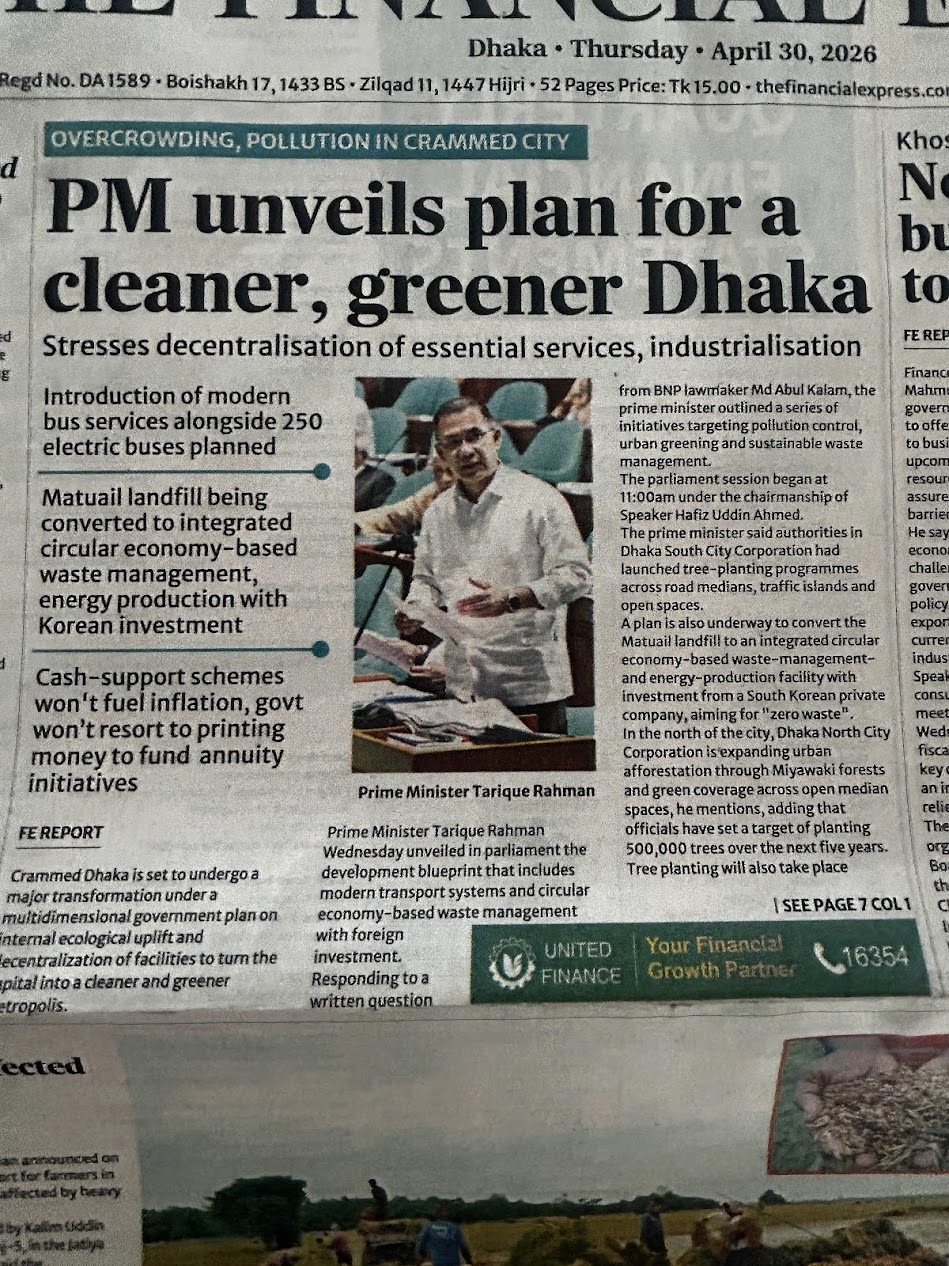
What the first 78 days tell us about the next 5 years
- Pro-China tilt is real and structural. Two China visits in three weeks, public language warmer than the Hasina era ever was. China responding with concrete trade concessions.
- India relationship is cooler. India still hosts Hasina; that's a sustained sore point. Bangladesh is repositioning, not breaking — but the relative space for Chinese capital is wider than at any point in the past 15 years.
- Reform agenda is real but bureaucratically slow. The 180-day plan is concrete but modest in ambition. Anti-corruption and banking cleanup are flagged but execution will take years.
- Long-term targets are aspirational. $1T GDP by 2034 and 5x health spending are political signals, not credible plans yet. Still useful as direction-of-travel indicators.
- LDC graduation in November is the cliff. Government is racing to lock in alternative tariff arrangements — China's 99% tariff-free extension is the biggest single win so far.
- Political stability looks decent for now. Two-thirds majority means the government can move legislation; opposition is fragmented (Awami League weakened, AL leadership in exile).
If you've been waiting for a window — this is it. The new government is actively courting Chinese capital, has eased BRI loan terms in negotiation, and is signaling investment-agreement upgrades. The next 12 months will see a flurry of concrete projects announced. Position teams now.
Where to deploy capital · ranked.行业机会图谱
Heat-mapped against three things: (1) demonstrated demand, (2) China-side competitive advantage, (3) BNP government priority. Top-row sectors are where Chinese investors should be most aggressive in 2026–2027.
Solar EPC & modules HOT · 9/10
523 MW PPAs already signed in Jan 2026; ~760 MW/year needed to 2030. China dominates global solar manufacturing and EPC. Direct fit.
Battery energy storage HOT · 8/10
Mandated in newer renewable tenders. Almost zero installed today. CATL, BYD, EVE all relevant.
Fabric mills (woven) HOT · 9/10
Bangladesh imports billions in woven fabric, mostly from China. Local mill = captive market + LDC graduation cushion.
Two-wheel EVs & e-rickshaws HOT · 8/10
Replicates China-2005 motorbike inflection. Yadea, Niu, BYD bikes already entering. E-rickshaw fleet conversion is huge addressable.
Garment machinery & automation WARM · 7/10
As Bangladesh moves to outerwear / technical wear, demand for advanced cutting, stitching, finishing equipment grows. CN suppliers cost-advantaged vs. Japanese/European.
Construction & infra EPC WARM · 7/10
Already a strong segment. Watch for contract reviews — but pipeline is growing under BNP. Bridges, ports, urban transit.
Pharma manufacturing & APIs WARM · 7/10
BD pharma exports growing. CN API supply is the global default. Joint ventures attractive given local industry maturity.
White goods & appliances WARM · 7/10
Walton (local champion) covers basics; mid-premium gap exists. Haier, Midea, TCL all relevant. Local assembly preferred.
ICT / BPO offshoring centers WARM · 6/10
Offshore engineering, R&D back-office, customer support hubs. English fluency tilts this away from CN domestic alternative for Western-facing services.
Consumer e-commerce COOL · 5/10
Alibaba's Daraz is already the platform. Better as marketplace seller than as platform challenger.
Mobile money / fintech COOL · 4/10
bKash is entrenched and beloved. Hard to dislodge; better to partner.
Auto (passenger cars) COOL · 4/10
$2,911 per capita is below the auto-takeoff threshold (~$5,000). Watch, don't deploy yet — except for premium EV early-adopter tier.
What could go wrong.主要风险
Political volatility
- Two regime transitions in 18 months. Stability is recent, not proven.
- BNP-Jamaat coalition tensions could fracture the majority.
- Awami League supporters disenfranchised, potential unrest.
- Military remains the implicit backstop — historically intervened.
Macro / FX
- Inflation 8.7%, sticky.
- FX reserves stabilizing but recently strained.
- USD repatriation has had delays — improving but check current state.
- Banking NPLs not yet cleaned up; structural fragility remains.
Execution / bureaucracy
- Land acquisition slow, politically sensitive.
- BIDA improving but not Vietnam-grade.
- Power and gas reliability still factor in siting.
- Customs and ports congested (Chittagong).
Geopolitical & trade
- LDC graduation Nov 2026 ends EU EBA preferences.
- India relationship cool — overland logistics complicated.
- US tariff pressure on Chinese-linked production possible.
- Climate vulnerability — flooding, cyclones, sea-level rise.
Contract review risk
- BNP government auditing Hasina-era big-ticket deals.
- Some Chinese projects flagged as overpriced may face renegotiation.
- New deals more transparent but slower to close.
Talent depth
- Top-tier engineering talent thin (BUET only).
- Mid-skill manufacturing depth shallow outside RMG.
- Senior management bench limited; expat support often needed early.
One paragraph for the IC memo.投委会备忘录段落
At the Beijing Auto Show last week, I saw the future is already here in China. And as William Gibson famously said, it's just not evenly distributed. I believe that with the help of AI and self-interested capital, the change we saw in Beijing over the last 25 years will come to Bangladesh in the next 5–10.
The 5-bullet pitch in numeric form
- 175M people · $2,911 per capita · median age 27.6. Demographically and economically equivalent to China between 1995 and 2008, depending on the metric.
- The new BNP government (Day 78) is tilting toward China. Two delegation visits in three weeks, eased BRI loan terms, 99% tariff-free access extended to 2028.
- Five priority sectors: solar EPC + BESS, fabric mills, two-wheel EVs, garment machinery, construction EPC. Each a direct China-supply-chain extension.
- Window: 24 months. LDC graduation in Nov 2026, contract review wave, and incumbent positioning all close the gap after that.
- Risk-adjusted, this is one of the few remaining structural plays with China-2005-style upside in a relatively friendly regulatory posture.
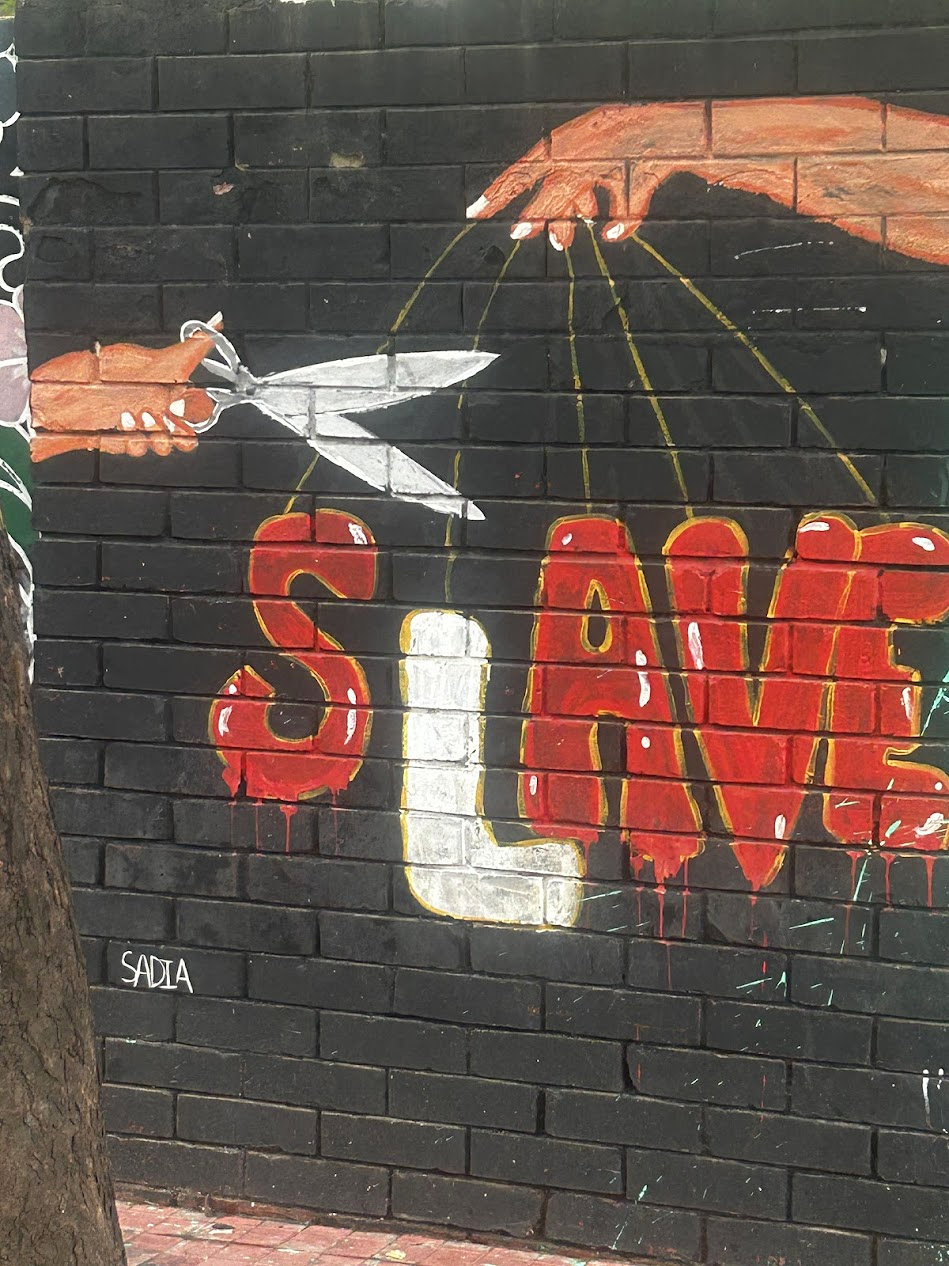
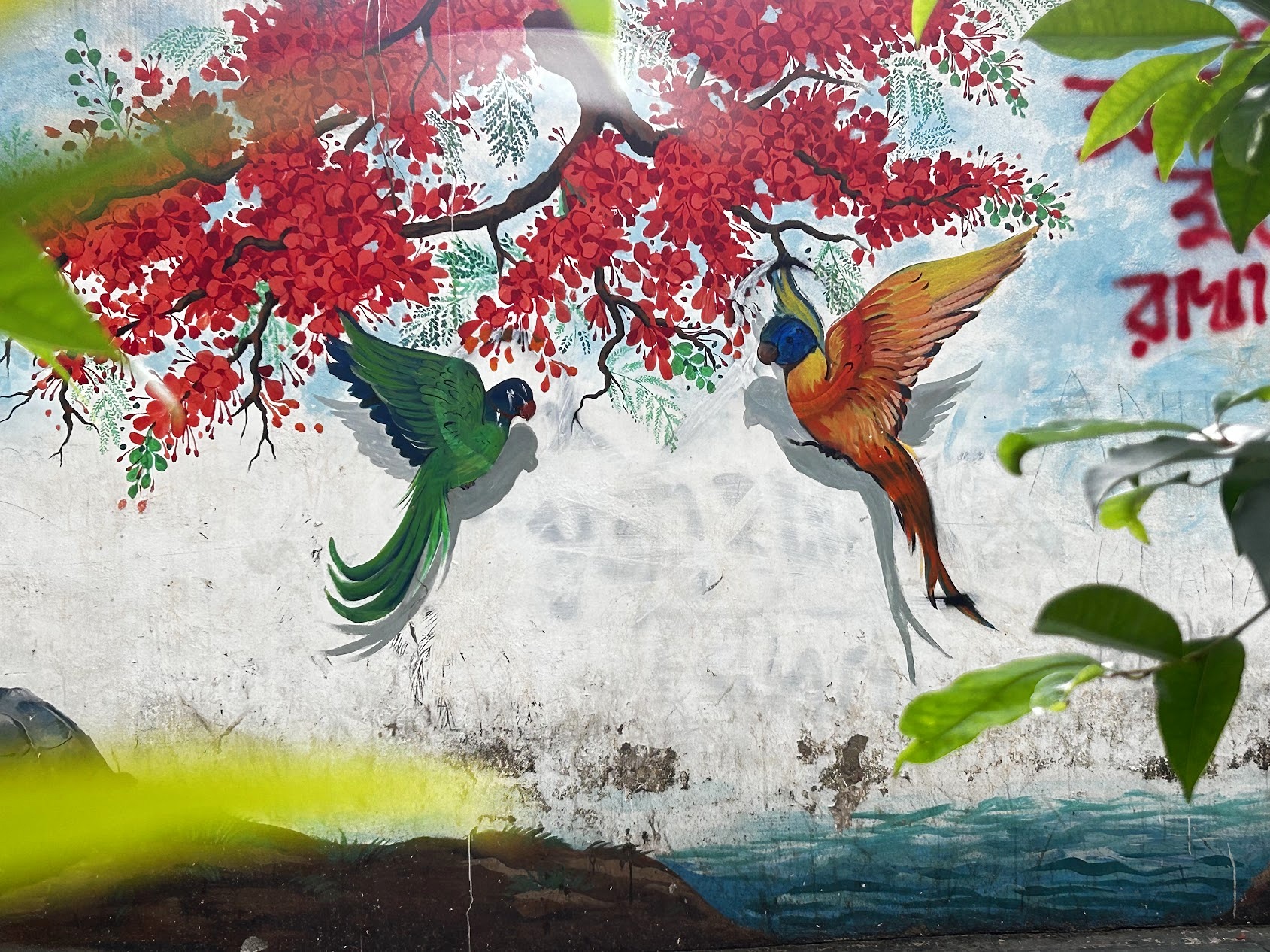
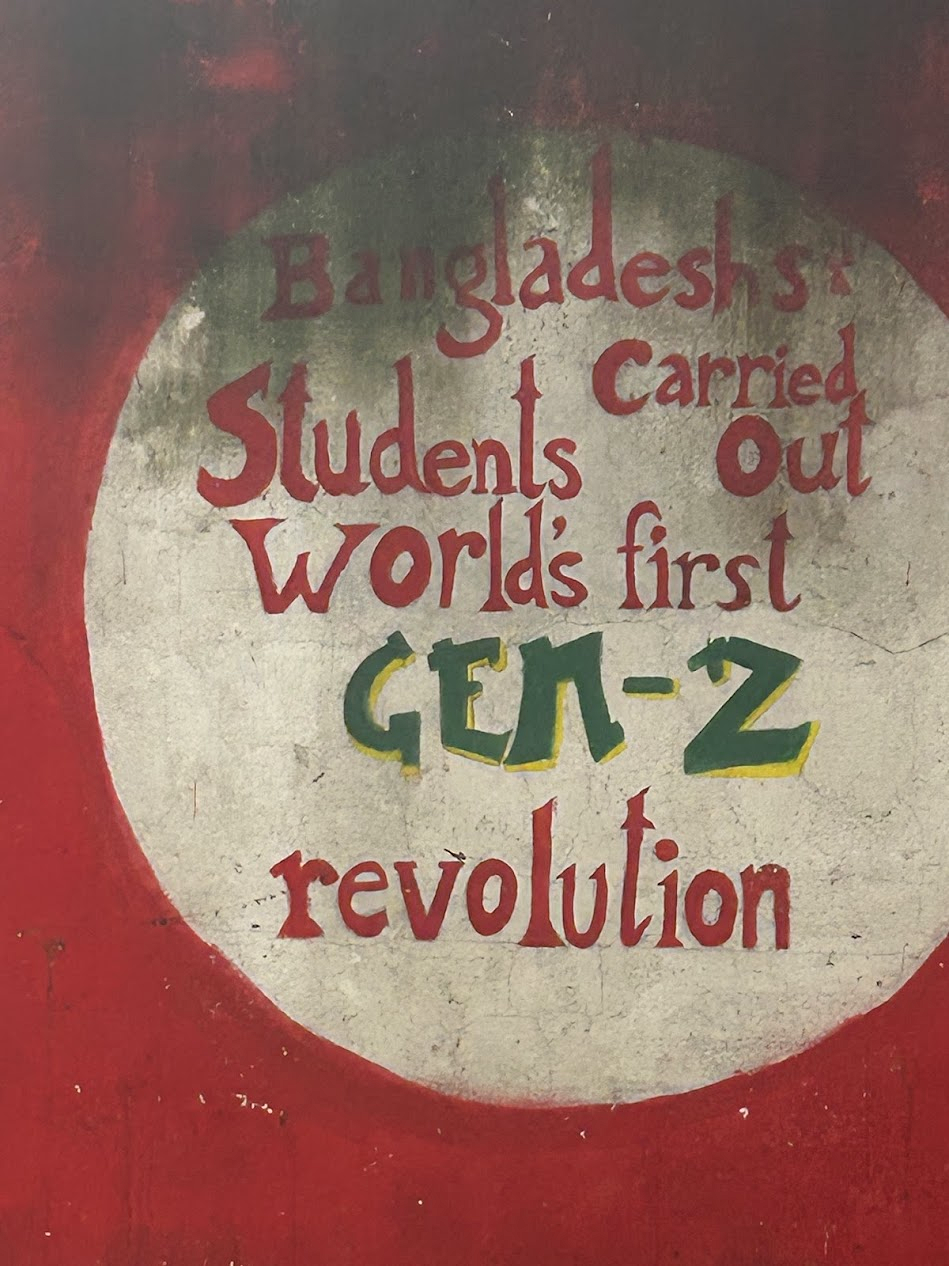
Dhaka, May 2026 — what the walls are saying.达卡的墙在说什么
Every photograph in this report was taken on the streets of Dhaka in the past two weeks. The street murals are not nostalgia — they're an active political vocabulary. Read them as primary-source signal alongside the data.
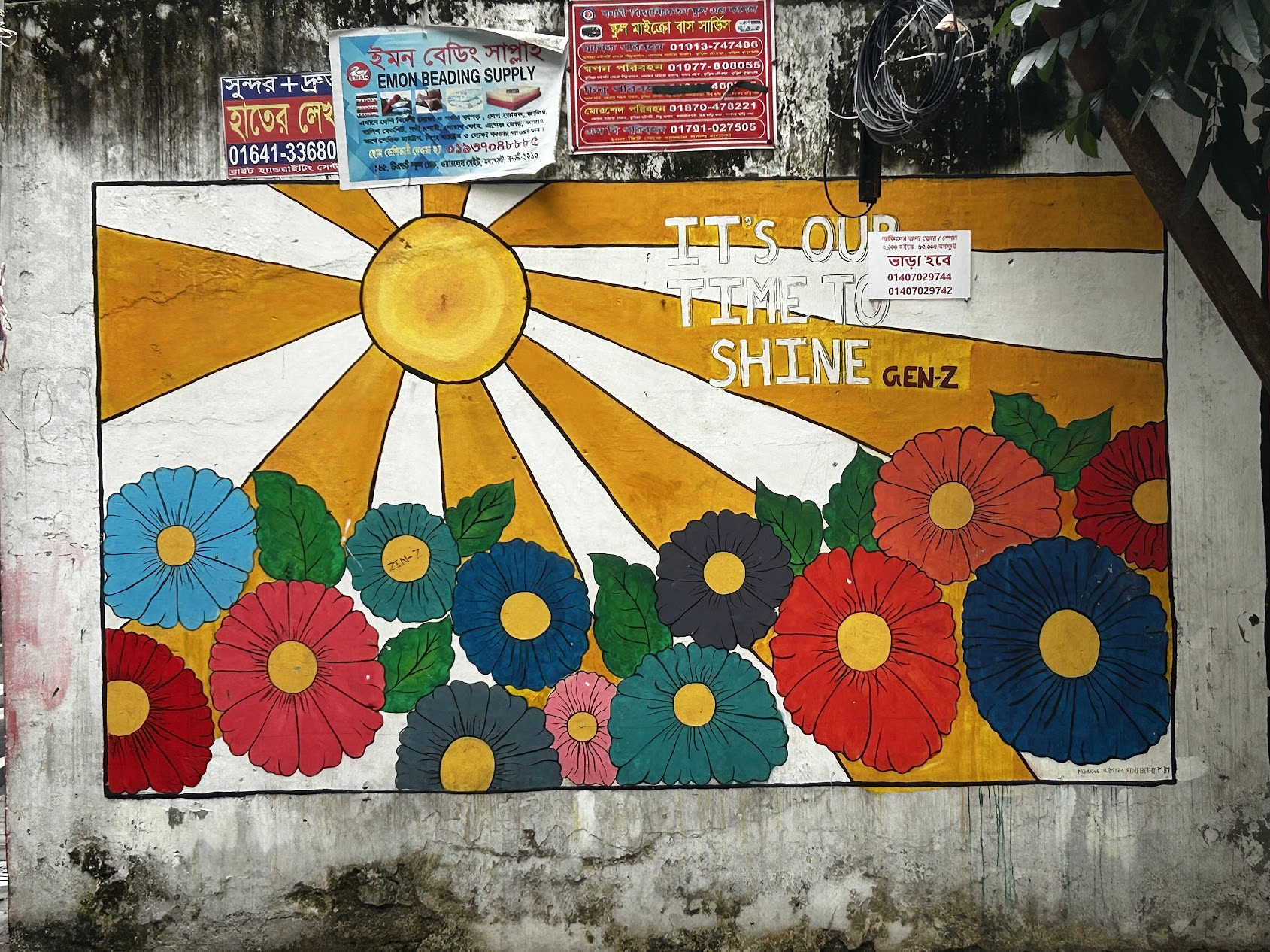
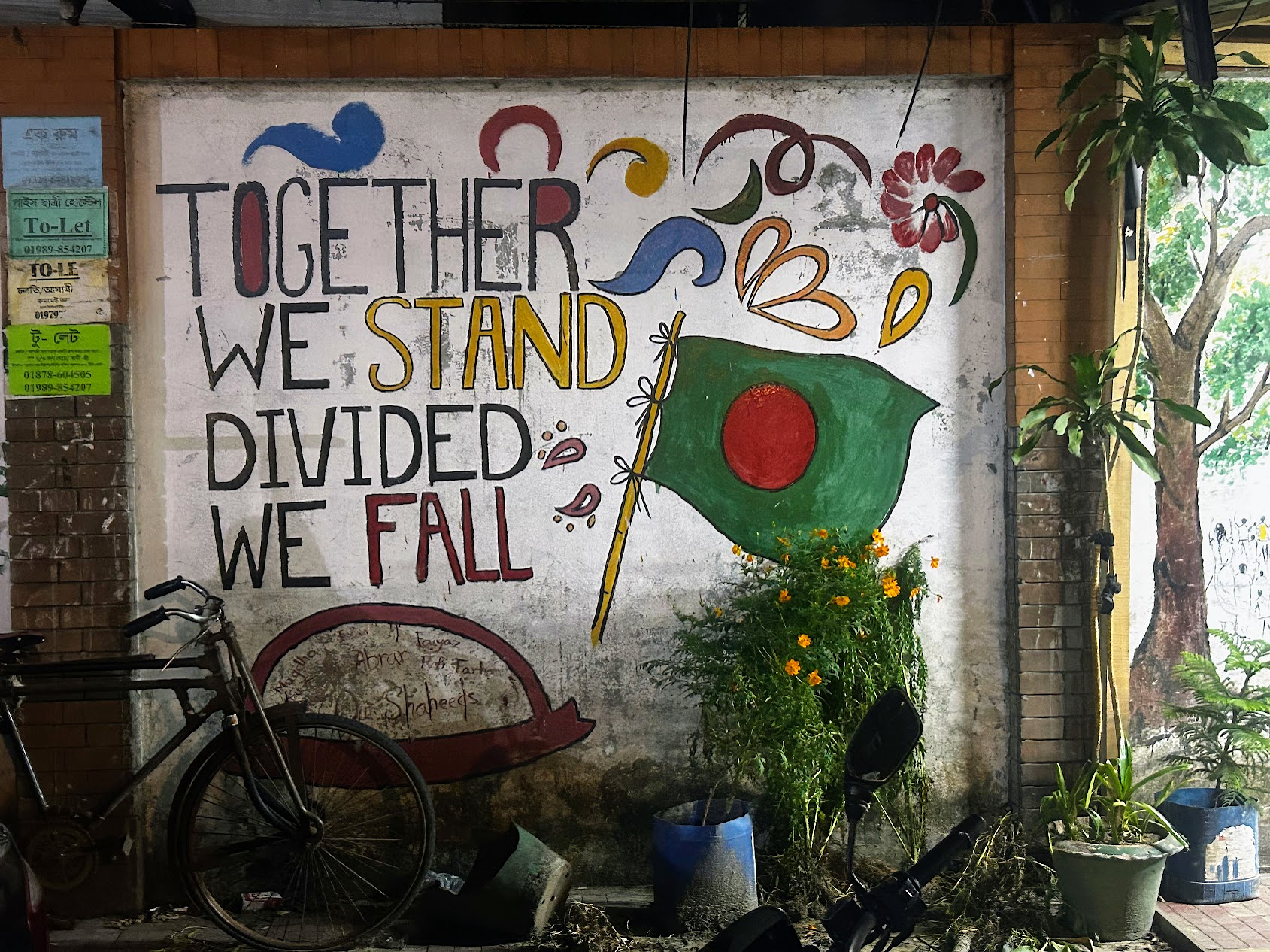
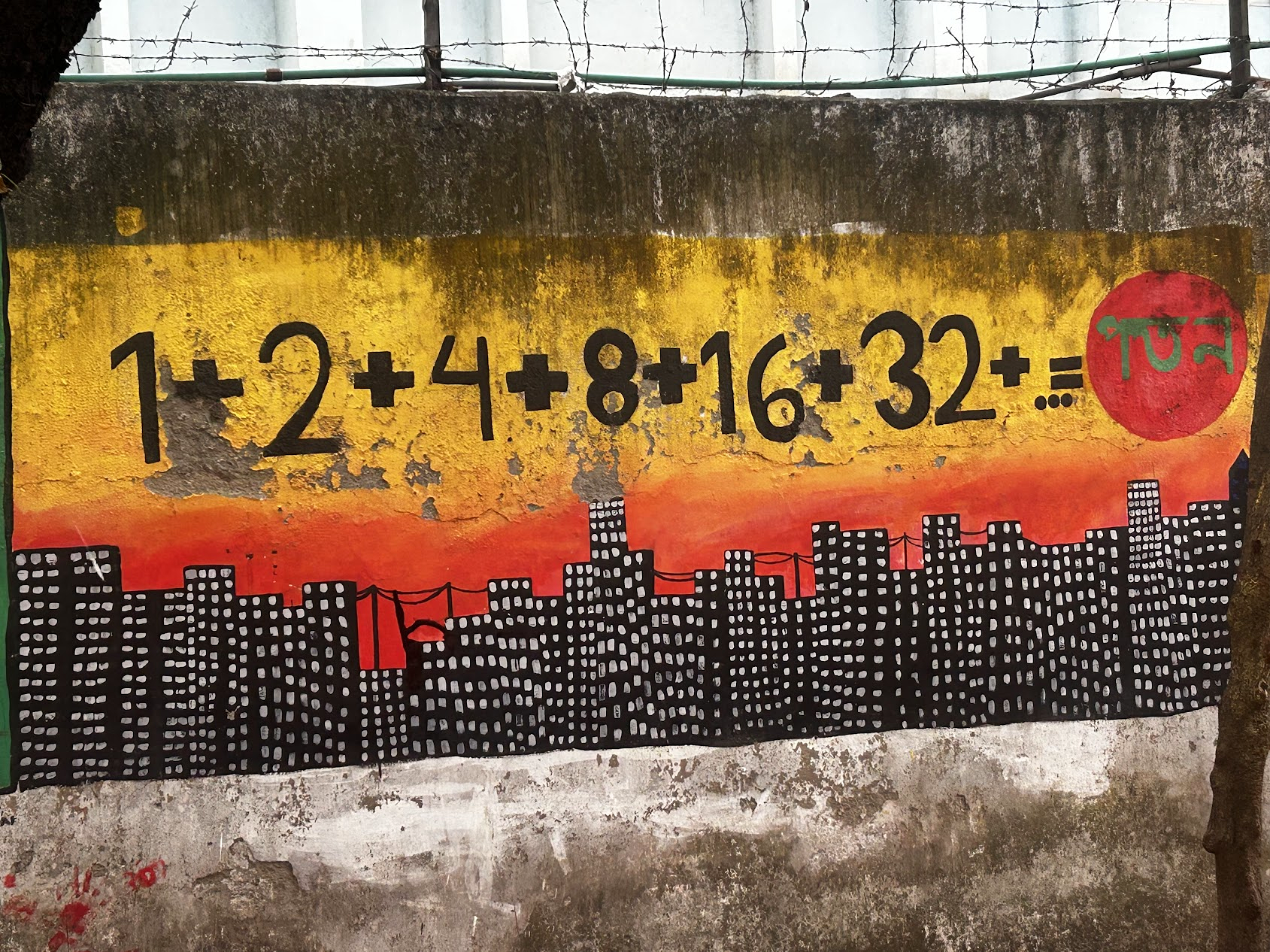
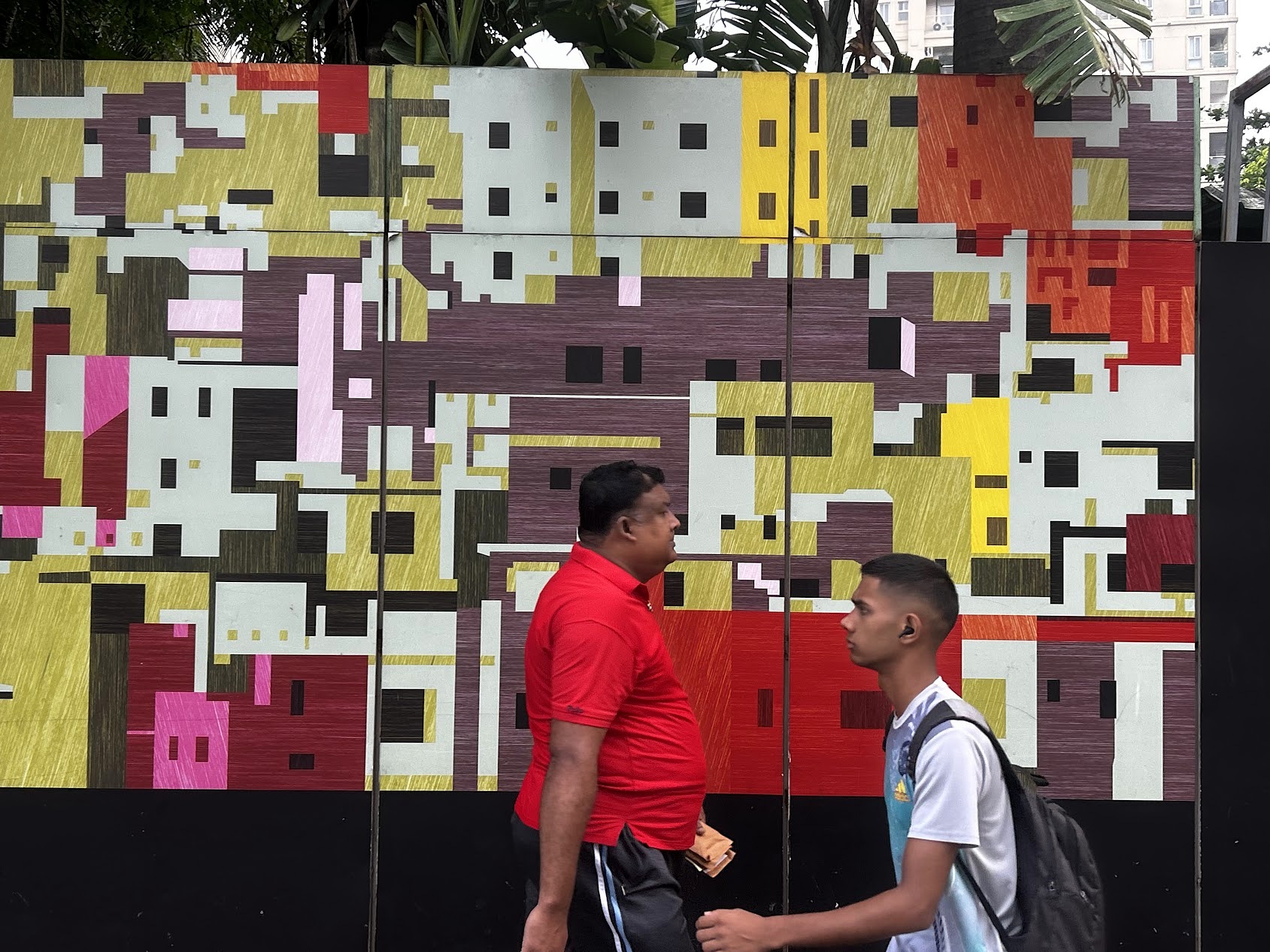
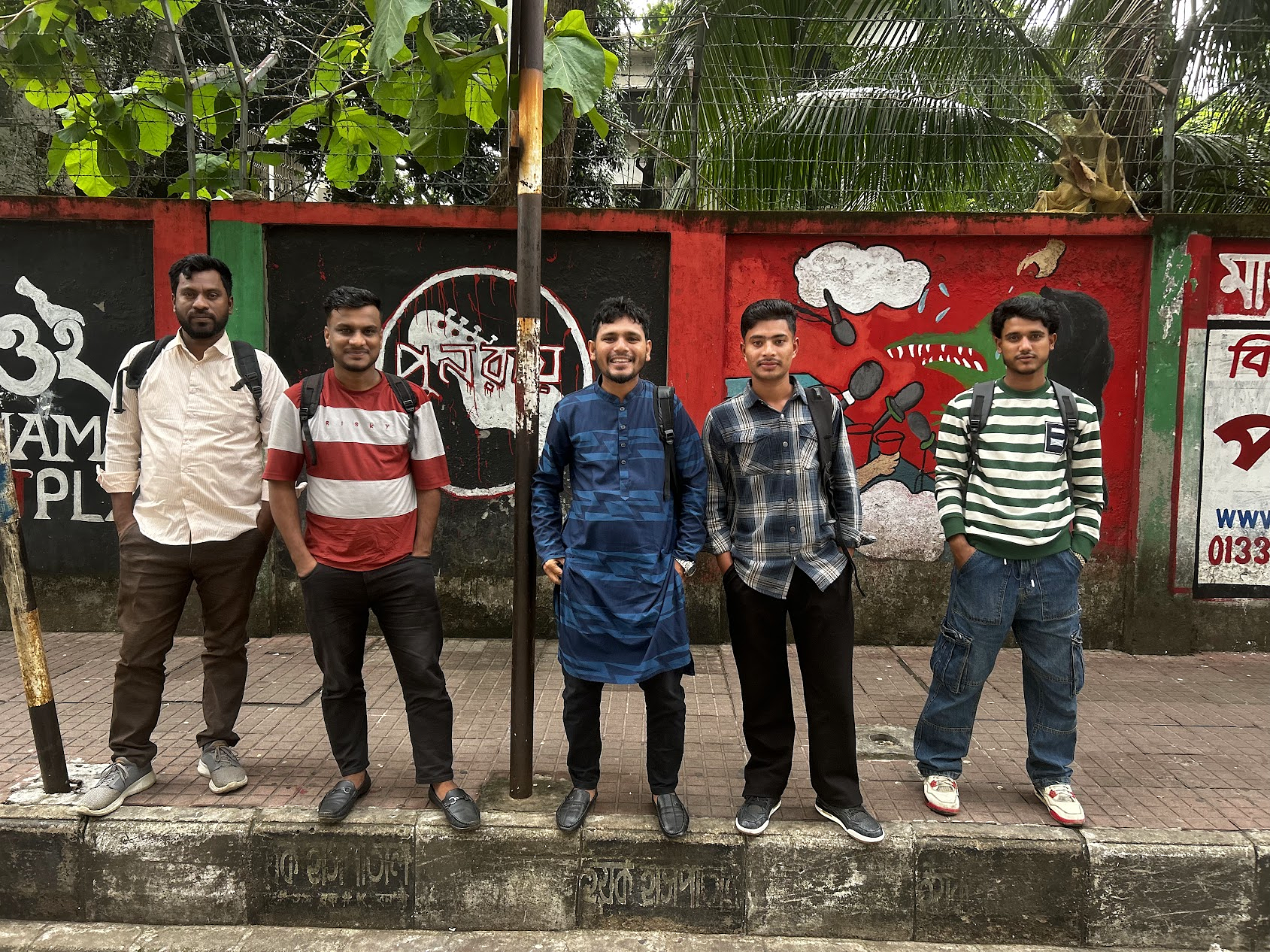
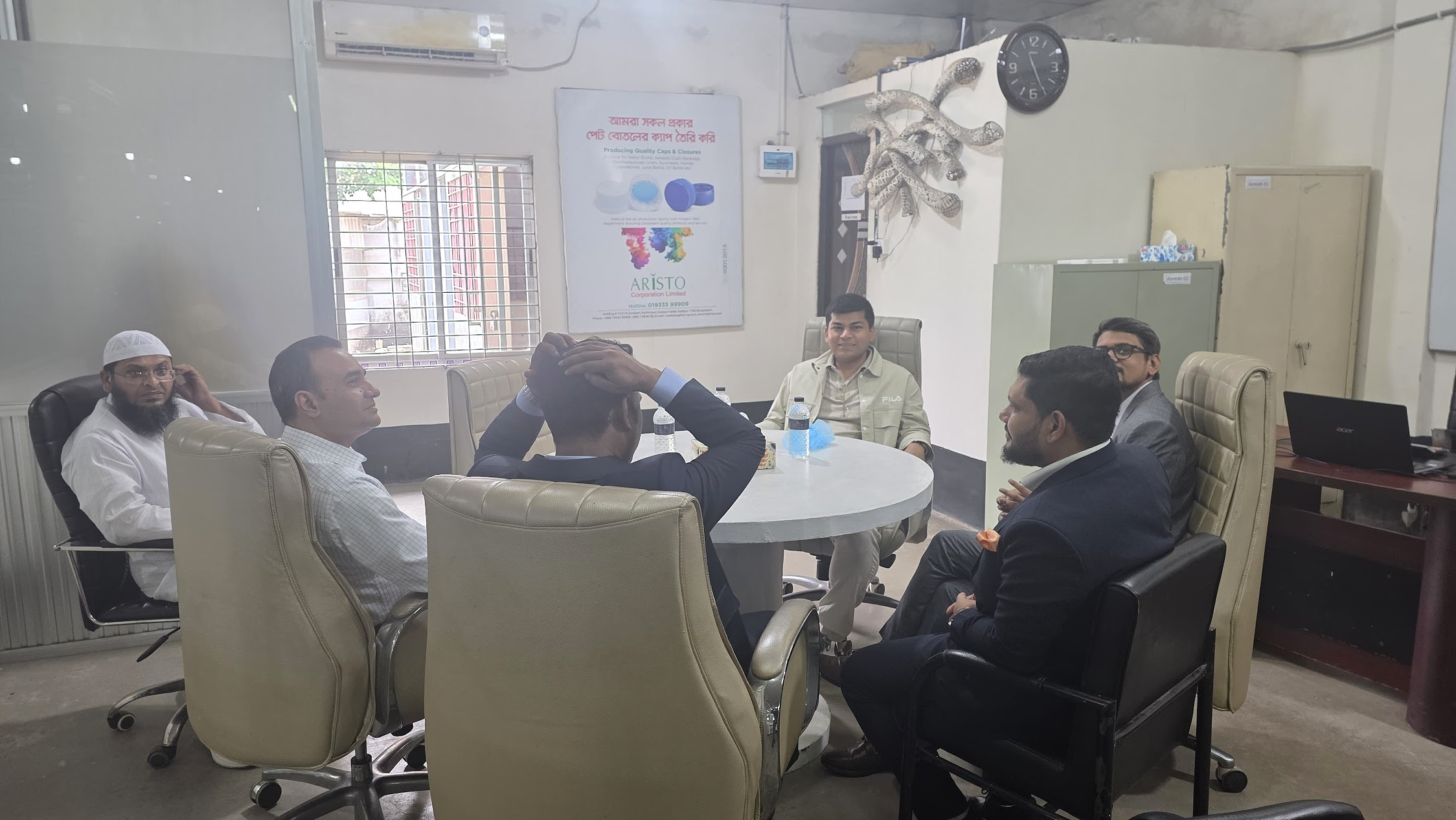
Bangladesh in May 2026 is a country mid-sentence — between the regime that ended and the one being built. The walls are louder than the markets. For investors used to reading official data, the walls are the leading indicator.